A digital bank saves you an average of €80–€120 a year in fees — but it’s not always the right choice. If you regularly deposit cash, need a mortgage with dedicated advisory, or aren’t comfortable managing everything through an app, a physical branch still has a point. The real question isn’t “which is better” — it’s which one fits how you actually use money. Here we compare real costs, services, and security levels, with data updated to 2026 and a few things most comparison sites won’t tell you.
\nTraditional and Digital Banks: What Actually Differs
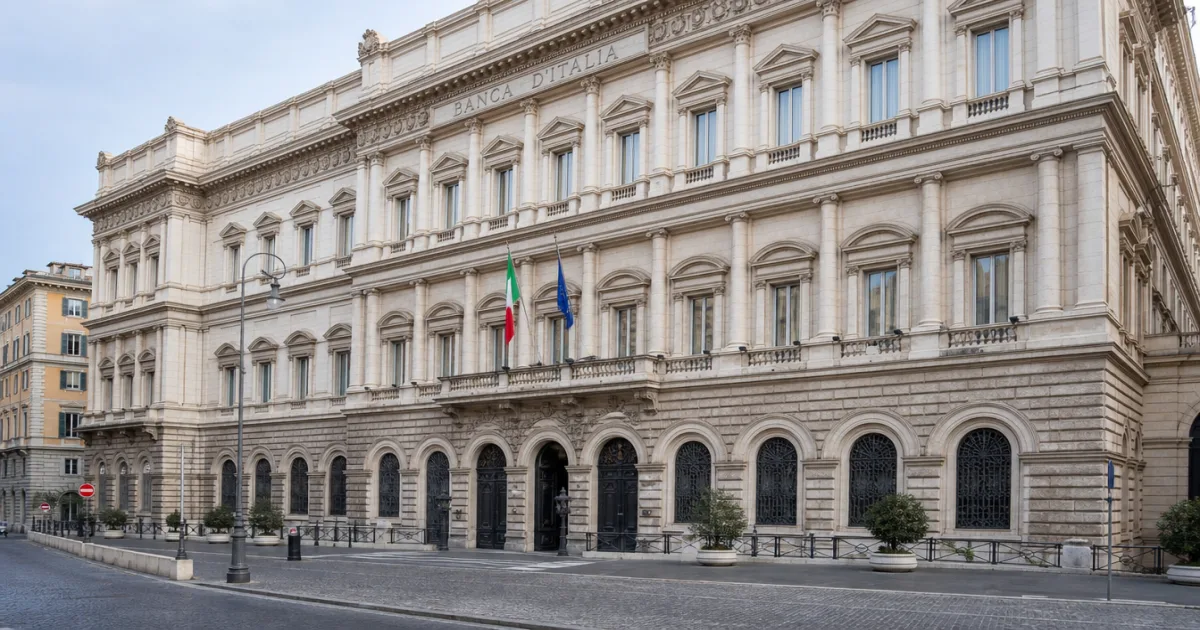
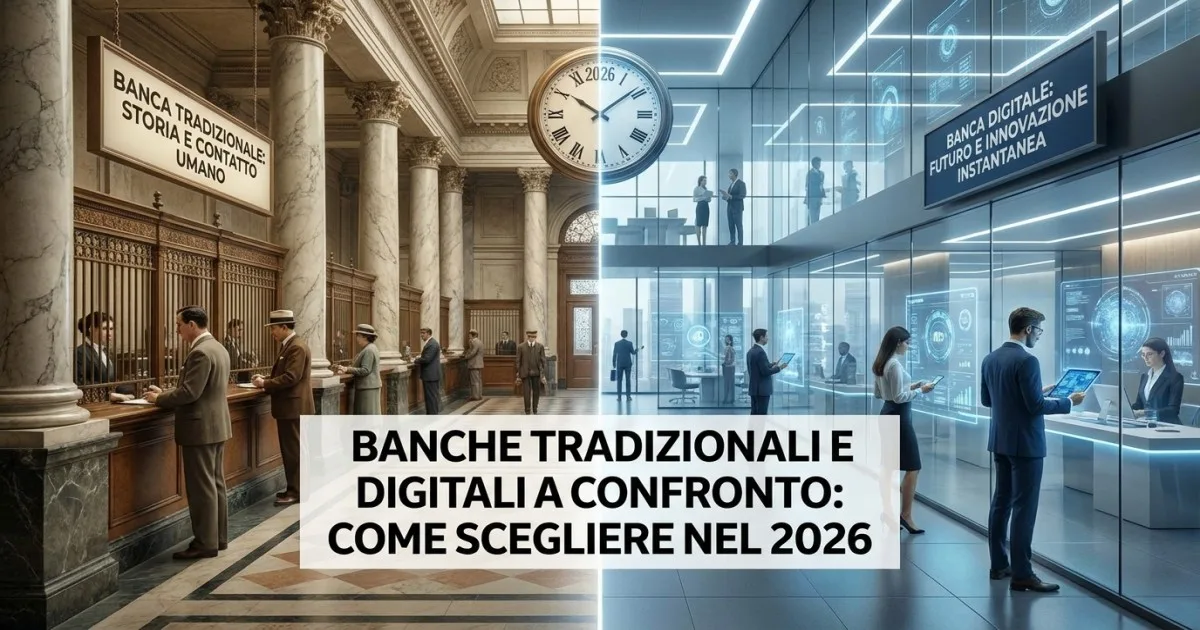
\nThe difference isn’t the name on the door — it’s the operating model. A traditional bank — Intesa Sanpaolo, UniCredit, BPER, Banco BPM — runs on a network of physical branches, front-desk staff, and dedicated advisors. A digital bank operates mainly through an app and online banking: no physical branch, or at most a handful of contact points. Fineco, for example, has 1.5 million customers without a dense branch network.
\nFrom a regulatory standpoint, though, the distinction is less sharp than it looks. Both are fully licensed banks: supervised by the Bank of Italy, subject to the same European rules, registered in the same official directories. When you open a Fineco or SelfyConto account, you’re opening a bank account legally identical to one at UniCredit.
\nNeobanks Are a Separate Case
\nDon’t confuse Italian digital banks (or those with an Italian branch) like Fineco, SelfyConto, Widiba, and BBVA with European neobanks such as Revolut or N26. The former have an Italian IBAN and operate under Bank of Italy supervision. The latter are technically foreign banks — Revolut holds a Lithuanian license — offering services in Italy under a freedom-of-services regime. The difference matters in practice: direct debits, utility billing, salary deposits.
\nWith a foreign IBAN some operations can run into friction: setting up a direct debit for utilities usually works, but isn’t guaranteed with every provider. Some employers push back on salary payments to non-Italian IBANs, even though legally they can’t refuse. The Italian Revenue Agency and F24 tax payments accept foreign IBANs but can take longer to process. The takeaway: Revolut and N26 work well as a secondary account or for frequent travelers, but as a primary account for anyone living in Italy full-time, they’re worth careful consideration.
\nCosts Compared: Fees, Commissions, and Hidden Charges
\nThis is where the gap is obvious. According to Bank of Italy data, the average annual cost of a traditional checking account (ICC, or overall cost indicator) runs between €90 and €130 for a typical household. A well-chosen digital account can cost you €0. Not a vague promise — real zero, verifiable on the product information sheet.
\nConcrete examples. Fineco charges €3.95 per month, waived if you have your salary credited or if you’re under 30. SelfyConto by Mediolanum costs €3.75 per month after the first year, with the same waiver conditions. BBVA and isybank (isyLight plan) are free with no conditions attached. A traditional bank like Intesa Sanpaolo, on the same usage profile, starts above €7 per month — plus commissions for instant transfers, over-the-counter transactions, and credit cards.
\nThe Costs Nobody Tells You About
\nA classic mistake is looking only at the monthly fee. The real costs are elsewhere: instant transfer fee (anywhere from €0 to €2.50), ATM withdrawal at another bank’s machine (€2 is the average), stamp duty (€34.20 per year on balances above €5,000), cost of a credit card (€40–€80 per year with traditional banks, often free with digital ones). Over a normal year of account activity, the gap between a traditional bank with no active promotions and a good digital one can exceed €200.
\nOne aspect we often see overlooked: instant transfers (SEPA instant credit transfers). Since 2025, EU regulation requires them to be priced the same as standard SEPA transfers, but some traditional banks are still updating their fee schedules. Check the latest product information sheet before signing.
\nA Concrete Example: Marco's Account
\nHere’s a typical scenario. Marco, 35, salaried employee, €1,800 monthly income, average balance of €4,000. He makes about 8 transfers a month, 4 ATM withdrawals, uses his debit card daily, and holds a credit card. With a traditional bank at a €6 base fee — adding stamp duty, a credit card at €50 per year, miscellaneous commissions — he ends up spending €180–€210 a year. With Fineco and salary credited, fee waived, stamp duty absorbed by the bank if he uses certain products: annual cost close to €30, all in. The net difference is roughly €150 a year. Over ten years, €1,500 — more than a decent ETF monthly contribution.
\nServices: Who Offers More?
\nTen years ago the answer was easy: traditional banks offered everything (mortgages, credit cards, wealth management, safe-deposit boxes), digital banks did the bare minimum. Today it’s different. Fineco offers mortgages, advanced trading, insurance products, and financial advisory by appointment (remote). SelfyConto integrates personal loans, mutual funds, and recurring investment plans. Even European neobanks are expanding: Revolut has introduced savings accounts, fractional stock investing, and crypto.
\nWhere traditional banks still hold a real edge is in “physical” services: safe-deposit boxes, cashier’s checks on the spot, cash transactions above standard thresholds, in-person wealth advisory for significant assets. If you run a business that takes cash daily, the nearby branch still matters. If everything goes through your phone, the digital bank wins on almost every front.
\nInvesting: Where Digital Banks Dominate
\nOn the investment side, digital banks tend to beat traditional ones on two counts: lower trading costs and better platforms. On Fineco you buy an ETF for a fixed commission of €2.95–€19 per trade. At a traditional bank, the same transaction goes through an advisor who applies commissions that are often double or triple, plus potential management charges. Anyone investing independently will find the tools at digital banks are significantly better.
\nCustomer Service: Where Physical Banks Still Win
\nChat is fast, phone works, but talking to someone who knows you has a value that doesn’t show up on any fee schedule. If you have a complicated case — an inheritance, a dispute with another institution, a question about a significant investment — the branch where they know your name resolves in half an hour what email would take days to sort out. Digital banks are improving fast (Fineco and Mediolanum both offer assignable dedicated advisors on request), but the “trusted person at the local branch” model remains typical of traditional banks. For older customers, those with complex assets, or anyone running non-standard transactions, that counts. For everyone else, a chat response in 30 seconds is usually enough.
\nSecurity: Are Your Savings Safer Online?
\nA fair question, and the answer surprises many people. In terms of deposit protection, there’s no difference: all Italian banks — traditional and digital — are members of the Interbank Deposit Protection Fund (FITD), which guarantees up to €100,000 per depositor per bank in the event of forced liquidation. Digital banks are also members of the FITD, as the Bank of Italy makes clear. For European neobanks, the same principle applies via national guarantee schemes: Revolut is covered by the Lithuanian system, N26 by the German one, both up to €100,000.
\nThe real difference, if any, is in cybersecurity. Digital banks invest heavily in strong authentication, biometrics, and real-time transaction monitoring. Traditional banks have had to catch up. Today the levels are comparable, but the actual risk for the average user isn’t a cyberattack on the bank — it’s phishing or social engineering aimed at you. On that front, digital banks paradoxically help: instant push notifications on every movement mean you spot something wrong immediately.
\nOne rule that applies to every bank — traditional or digital: no bank will ever ask for your PIN, password, or security codes by email, SMS, or phone. If that happens, it’s a scam. Report it to your bank’s fraud line immediately. Digital banks typically block suspicious transactions within minutes; traditional banks can take longer to confirm.
\nWhat Actually Happens If a Bank Fails
\nThe scenario is remote but worth knowing. In forced liquidation, the FITD reimburses within seven business days up to €100,000, with no claim required from you. For amounts above the threshold, the excess remains as a credit in the liquidating bank’s liabilities, with partial recovery possible. That’s why anyone with significant savings is smart to spread them across multiple institutions: the guarantee applies per bank, not cumulatively.
\nThe Best Digital Banks in Italy in 2026
\nNo ranking is definitive — it depends on what you need — but some options stand out for strength and value. Fineco remains the reference point for anyone wanting a full-featured account with advanced investment capabilities: waivable fee, excellent trading platform, mortgage options, premium cards. SelfyConto by Mediolanum is the alternative for those who prefer a 100% Italian institution with available advisors. BBVA has gained ground with a free account, 3% cashback in the first six months, and a 3% gross interest rate on held liquidity.
\nAmong neobanks, Revolut leads for frequent travelers or multi-currency management: interbank exchange rates, card usable everywhere without surcharges (within the free-plan limits). Isybank, born inside Intesa Sanpaolo, combines the group’s solidity with an agile app: the isyLight plan is free for life, with free withdrawals at all Intesa ATMs. For a clean secondary account, Hype remains popular, though with some limitations on international transactions.
\nTraditional Banks That Are Innovating
\nItaly’s major banks haven’t stood still. Intesa Sanpaolo launched isybank to capture the digital-native audience without hollowing out its traditional network. UniCredit has the Genius account with access to smart ATMs where you can deposit cash without going to a teller. BPER has the Conto On Demand, fully modular, opened online with fees waivable up to age 35. The line between “traditional” and “digital” is increasingly blurred.
\nIn our analysis, that’s good news for the customer: you can choose the level of service you need and pay only for what you actually use. The old model of the “standard checking account” at €15 per month with three free transactions is disappearing even at the big banks.
\nFull Comparison Table
\nA concise comparison of the main options available in Italy today, with fees and conditions updated to 2026:
\n| Bank | \nType | \nMonthly fee | \nStrengths | \nLimitations | \n
|---|---|---|---|---|
| Fineco | \nDigital IT | \n€3.95/month (waivable) | \nTrading, full-service, mortgages | \nFee applies without salary credit | \n
| SelfyConto (Mediolanum) | \nDigital IT | \n€3.75/month (free under 30) | \nDedicated advisors, solidity | \nCash deposits not instant | \n
| BBVA | \nDigital EU | \nFree | \n3% interest, 3% cashback | \n€2 fee on withdrawals under €100 | \n
| isybank | \nDigital IT (Intesa) | \n€0 Light plan | \nIntesa group backing, fast app | \nLimited features on base plan | \n
| Revolut | \nNeobank EU | \nFree (Standard plan) | \nMulti-currency, travel, speed | \nLithuanian IBAN, some SEPA constraints | \n
| Intesa Sanpaolo (XME Conto) | \nTraditional | \n€6–€7/month | \nBranches, advisory, integrated products | \nSignificantly higher cost | \n
| UniCredit (Genius) | \nTraditional | \n€3.75–€6/month | \nSmart ATMs, wide branch network | \nExtra costs on out-of-plan transactions | \n
Fee data may vary based on active promotions or specific profiles (young adults, students, retirees). Always check the current product information sheet on the bank’s website before deciding.
\nHow to Choose: The Criteria That Actually Matter
\nThe choice doesn’t depend on what’s objectively “better” — no bank is, in absolute terms. It depends on how you use your account. Start with these concrete questions, answered honestly about what you do every month.
\nHow often do you deal in cash? If the answer is “rarely or never,” a digital bank is the obvious choice. If you regularly deposit checks or receive cash, a bank with branches or smart ATMs (UniCredit, Intesa) genuinely serves a purpose.
\nDo you invest independently? Then Fineco or Directa offer trading costs that no traditional bank can match. If you rely on an advisor, the value of a physical bank shifts to the human relationship, not the platform.
\nDo you need a mortgage soon? All banks offer them, but a bank where you already have a solid relationship (salary credited, active products) tends to move faster on the application. That holds for both traditional banks and Fineco or SelfyConto.
\nDo you travel frequently or manage multiple currencies? Revolut and Wise make a real difference here, even as a secondary account.
\nHow comfortable are you with an app? If the idea of having no branch makes you anxious, a digital bank isn’t for you — and that’s fine. A bank should give you peace of mind, not add to your stress.
\nCan You Have Both? The Multi-Bank Approach
\nYes, and in our experience it’s the solution that works best for many savers. There’s no legal limit on how many accounts you can hold, and combining a primary account with one or two secondary ones makes practical sense.
\nThe setup we often recommend: one free-fee digital account for salary, utilities, and recurring expenses (Fineco, BBVA, SelfyConto, isybank); one secondary account for travel and non-euro spending (Revolut or Wise); optionally, a traditional bank account if you need a branch for specific transactions. Moving money between accounts is free thanks to SEPA instant transfers, so “fragmentation” isn’t a problem.
\nAn extra benefit of the multi-bank approach: the FITD guarantee applies per bank. If you have €180,000 split across two institutions, all of it is covered. In a single bank, €80,000 would fall outside the protection.
\nFor a step-by-step guide on how to open a bank account online in Italy, or to compare credit, debit, and prepaid cards, we have dedicated guides to help you pick the right package.
\nThe best way to find out if a bank suits you is to try it. Open the account with the waivable fee, use it for three months on your actual transactions, and see if anything genuinely feels missing. Switching banks has become straightforward thanks to portability rules: the new bank handles the transfer of standing orders and utility direct debits within 12 business days, with no action required from you. The cost of getting your first choice wrong, today, is close to zero.
\nThis article describes Italian regulations and financial products. Information is provided for educational purposes and does not constitute financial, tax, or legal advice. Rules and figures refer to the Italian regulatory framework as of the publication date and may change.