Tax credits are the most direct way to reduce the IRPEF (Italy's personal income tax) you owe each year. Medical expenses, a mortgage on your primary home, home renovations, children's education, insurance policies: every item, correctly documented, translates into a real reduction in the tax owed. In 2026 the picture is more complex than in previous years: different credit rates for the home renovation bonus depending on whether it is your primary or secondary residence, a spending cap for those earning over €75,000, and a flat €440 reduction on 19% tax credits for incomes above €200,000. Understanding what you can deduct and to what extent means turning knowledge into money: even for an average taxpayer, this can amount to hundreds of euros per year.
What a tax credit is and how it works
A tax credit is an amount that reduces your IRPEF liability directly. It works differently from a deduction: a deduction lowers taxable income before the tax is calculated, while a tax credit is applied against the tax already computed. Most tax credits in Italy are set at 19%, meaning that for every €100 of qualifying expense you recover €19 in tax.
A concrete example. An employee has a gross IRPEF liability of €8,000. They incur €1,500 in medical expenses. The qualifying base is €1,500 − €129.11 (the statutory threshold) = €1,370.89. The tax credit is €1,370.89 × 19% = €260.47. Their net IRPEF becomes €7,739.53: €260 stays in their pocket.
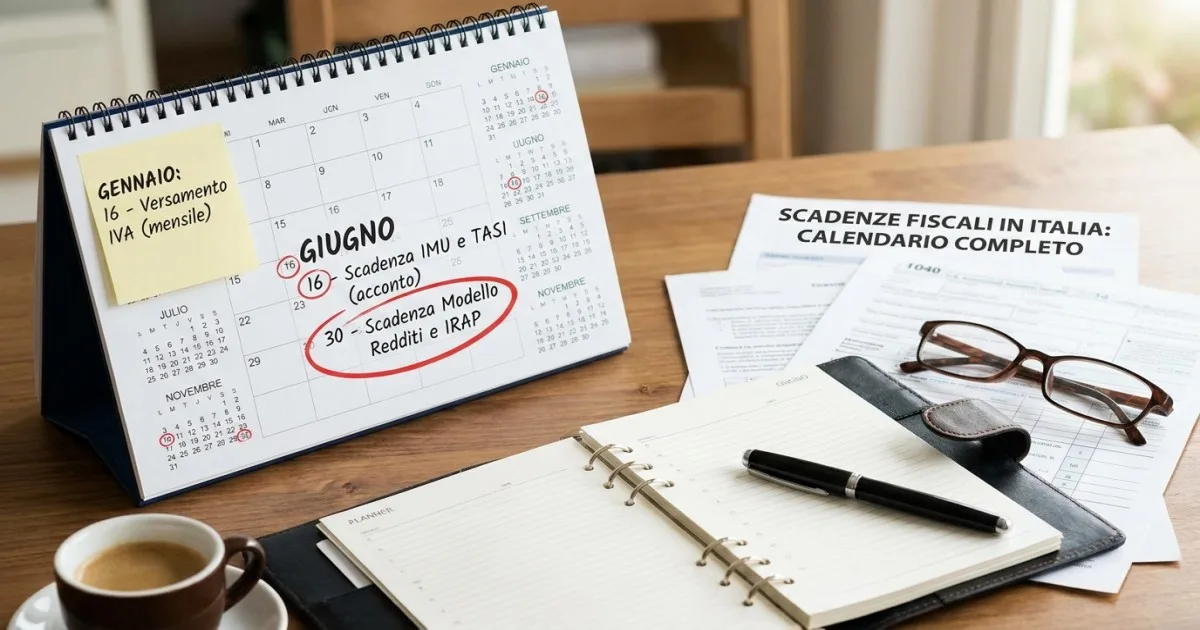
Tax credits are claimed in the modello 730 (Italy's simplified employee tax form), used by employees and retirees, or in the Redditi PF tax form, used by the self-employed and others. The 730 tax form has the advantage of a direct refund in the payslip: those who file by July receive the refund in August–September; those who file by September, in October–November.
Medical expenses: 19% credit with no upper cap
Medical expenses are the most widely used category and one of the broadest: the credit is 19% on everything exceeding the statutory threshold of €129.11 per year, with no upper limit. If medical expenses exceed €15,493.71, the credit can be spread over four equal annual instalments.
Qualifying costs include: specialist visits, diagnostic tests, prescription medicines (with a pharmacy receipt showing your tax code, codice fiscale), over-the-counter medicines — but from 2025 only if paid by traceable means (card, bank transfer), dental treatment, hospital stays, CE-certified medical devices including prescription glasses, contact lenses, hearing aids, physiotherapy and rehabilitation, and qualified nursing care. Excluded are food supplements without a prescription, unrecognised homeopathic remedies, and non-therapeutic cosmetic procedures.
Medical expenses remain fully creditable even for those with income above €75,000: they are expressly excluded from the spending cap introduced in 2025 and confirmed for 2026. This is an important safeguard for middle-to-high earners with significant healthcare costs.
Medical expenses for dependent family members
You can also claim credits for medical expenses incurred on behalf of fiscally dependent family members (spouse, children, and relatives who live with you within certain income thresholds). For children aged 21–30 with their own income below €4,000, the parent who paid the costs can still claim the credit, even if the child is no longer dependent for other purposes.
Primary home mortgage: up to €760 per year
Interest paid on a mortgage for the purchase of your primary home qualifies for a 19% credit on a maximum of €4,000 per year, giving a maximum credit of €760. For mortgages taken out for the construction or major renovation of a primary home, the qualifying cap falls to €2,582.28 (maximum credit €490).
Three conditions apply. The property must be the primary residence of the mortgage holder or of a family member. The purchase must have occurred within 12 months before or after the mortgage was taken out. The mortgage must be secured by a lien on the property itself.
If the mortgage is held jointly by two spouses, each claims their share of interest: the €4,000 limit is split in half, so each spouse claims a maximum of €2,000 in interest (€380 credit each). If the property is subsequently rented out, the credit is lost from the month after the rental contract is registered.
Ancillary mortgage costs are also creditable in the year of signing: the notary's fee for the mortgage deed (not for the property purchase), the bank's appraisal, and the loan origination fee. All these items count toward the €4,000 cap. Like medical expenses, primary home mortgage interest is excluded from the high-income spending cap: it is fully creditable even above €75,000.
Home bonuses 2026: renovations, ecobonus, sismabonus
Italy's 2026 Budget Law confirmed this year's rates for the main home improvement incentives, deferring a further cut to 2027. Here is the current picture.
| Bonus | Primary residence | Other properties | Qualifying cap |
|---|---|---|---|
| Renovation bonus | 50% | 36% | €96,000 per unit |
| Ecobonus (energy efficiency) | 50% | 36% | €96,000 per unit |
| Sismabonus (seismic safety) | 50% | 36% | €96,000 per unit |
| Furniture bonus | 50% | 50% | €5,000 per unit |
The furniture bonus requires a link to a qualifying renovation: it applies only to furnishings and major household appliances (refrigerator minimum class F, washing machine class E, oven class A) purchased for a property where creditable works are underway or have already begun.
All home improvement credits are recovered over 10 equal annual instalments. On €30,000 spent renovating a primary residence, the total credit is €15,000, split into €1,500 per year for 10 years. Payment must be made by bonifico parlante — a designated bank transfer that includes the tax codes of both payer and payee, and the relevant legislative reference. Without a bonifico parlante, the credit is forfeit.
From 2027, unless further extensions are passed, rates will fall to 36% for primary residences and 30% for other properties. For anyone planning significant works, closing them before 31 December 2026 is concretely more advantageous.
Education expenses: schools, universities, nurseries
Education costs for children break down into several categories, each with its own cap.
For nursery schools, primary and secondary schools (state, accredited private and private) the credit is 19% on a maximum of €1,000 per pupil per year. Qualifying costs include school fees, meals, school trips and voluntary contributions approved by the school's governing bodies. For nursery schools (asilo nido) the cap is €632 per child, also at 19%.
For university, state university fees are fully creditable. For private and online universities, the Ministry of Universities and Research publishes annual tables of maximum qualifying amounts, differentiated by academic area (medical-healthcare, science-technology, humanities-social sciences) and by the location of the university.
For music conservatories and AFAM institutes (Italy's higher arts and music institutions), the credit is 19% on a maximum of €1,000 per child, subject to a parental income limit of €36,000.
Other lesser-known but useful credits
A number of smaller items can add up to a meaningful difference on your tax return.
Funeral expenses qualify for a 19% credit on a maximum of €1,550 per death, regardless of kinship with the deceased. Veterinary expenses qualify at 19% above the €129.11 threshold, on a maximum of €750 from 2026 (up from €550 in 2025). Life and accident insurance with a minimum term of five years qualifies at 19% on a maximum of €530 per year (€1,291.14 for long-term care policies).
Voluntary contributions to political parties qualify at 26% on amounts between €30 and €30,000 per year. Donations to ONLUS charities, third-sector bodies and amateur sports associations have different regimes: a 30% credit on up to €30,000 for ONLUS and cultural institutions, or 35% for volunteering associations. Children's sports activities for those aged 5–18 qualify at 19% on a maximum of €210 per child.
Rent on your primary home is supported by flat-rate credits varying by income band (€300–991). Rent paid by university students studying away from home qualifies at 19% on a maximum of €2,633 per year, for universities located at least 100 km from the student's registered residence.
The spending cap for incomes above €75,000
From 2025, confirmed for 2026, those earning more than €75,000 face an overall cap on their 19% tax credits, calculated on a base amount adjusted by a coefficient linked to dependent children.
| Total income | Base amount | Coefficient |
|---|---|---|
| €75,000 – €100,000 | €14,000 | 0.50 (no children) → 1.00 (3+ children or disabled child) |
| Above €100,000 | €8,000 | 0.50 (no children) → 1.00 (3+ children or disabled child) |
The coefficients by family composition are: 0.50 with no children, 0.70 with 1 child, 0.85 with 2 children, 1.00 with 3 or more children or at least one disabled child. Example: a taxpayer with €90,000 income and 2 children → spending cap = €14,000 × 0.85 = €11,900.
Excluded from the cap: medical expenses, interest on a primary home mortgage taken out before 2025, instalments for multi-year home improvement works approved before 2025, and costs under insurance contracts signed before 2025. For those with existing mortgages or renovations in progress from before 2025, nothing changes.
The flat reduction for incomes above €200,000
Italy's 2026 Budget Law introduced a measure for the highest earners: for taxpayers with total income above €200,000, the total amount of 19% tax credits is reduced by a flat €440 per year. Excluded from the reduction are medical expenses, donations to political parties and policies against natural disasters.
It is a modest reduction in absolute terms but symbolically significant: Italy's tax system is progressively eroding credit benefits for high earners, in line with the IRPEF reforms initiated in 2025.
Documentation: what to keep and for how long
All qualifying expenses must be documented. For medical expenses, you need pharmacy receipts (scontrini parlanti) showing your tax code (codice fiscale), and invoices from doctors and healthcare facilities. For the mortgage you need the bank's annual statement detailing the interest paid. For home works you need bonifici parlanti, invoices, and any required ENEA notification for energy-efficiency improvements (to be submitted within 90 days of completing the works).
Documents must be kept for 10 years from the date the tax return was filed: the Italian Revenue Agency (Agenzia delle Entrate) can request checks up to that point. One important note from 2025: over-the-counter medicines (without a prescription) only qualify for the credit if paid by traceable means. Cash payments are no longer accepted.
Common mistakes that cost you the credit
The first mistake is not having a bonifico parlante for renovation works. A payment by cheque or ordinary bank transfer permanently forfeits the credit, even if the work is perfectly documented. The same applies to costs on shared-building works: you need a statement from the building administrator showing your individual share.
The second mistake is forgetting the threshold. Medical expenses below €129.11 per year give no credit at all: someone with only €100 in medical costs recovers nothing. Above the threshold, the credit applies only to the excess, not to the full amount.
The third mistake is mixing up costs for different properties. The €96,000 renovation cap applies separately to each property unit: if you are renovating your primary and secondary residence, you have two separate caps, but the costs must be kept clearly distinct in your records — separate bonifici parlanti and separate invoices for each property.
How much you actually recover: two practical examples
Two typical Italian household profiles to illustrate the concrete numbers.
Household A: employee with a gross salary of €35,000, primary home mortgage with €3,000 in annual interest, €1,800 in medical expenses for the household, €800 in school costs for two children, €200 in sports activities for the children. Total credits: (€3,000 × 19%) + (€1,670.89 × 19%) + (€800 × 19% × 2 children) + (€200 × 19%) = €570 + €317 + €304 + €38 = roughly €1,229. On an IRPEF bill of around €8,000, that is a 15% reduction in the tax burden.
Household B: retired couple with combined income of €50,000, €2,500 in medical expenses, a primary home renovation completed in 2026 for €25,000 (spread over 10 instalments), €600 in life insurance, €150 in veterinary expenses. Annual combined credits: (€2,370.89 × 19%) + (€12,500 / 10) + (€530 × 19%) + (€20.89 × 19%) = €450 + €1,250 + €100.70 + €4 = roughly €1,805 per year for the next 10 years, thanks to the phased home improvement credit.
When it is worth going to a CAF or an accountant
For those who only have a CU (Italy's annual income certificate), a few medical receipts and perhaps a mortgage, the Agenzia delle Entrate's pre-filled 730 works well: the data arrives pre-entered and you just confirm it. For more complex situations — home renovation works, mixed income sources, complex family dependants, the high-income spending cap — a CAF (Italy's tax assistance center, free for employees with a tax withholding agent) or an accountant prevents errors that cost more than the fee. A lost credit due to a documentation mistake can be worth hundreds of euros.
The secret of tax credits is not memorising every rule: it is organising your documents throughout the year, keeping receipts and invoices, and making payments by traceable means even when it does not seem necessary. The difference between those who recover everything and those who lose out is not tax knowledge: it is discipline in filing.